

By VICTOR OGALLE
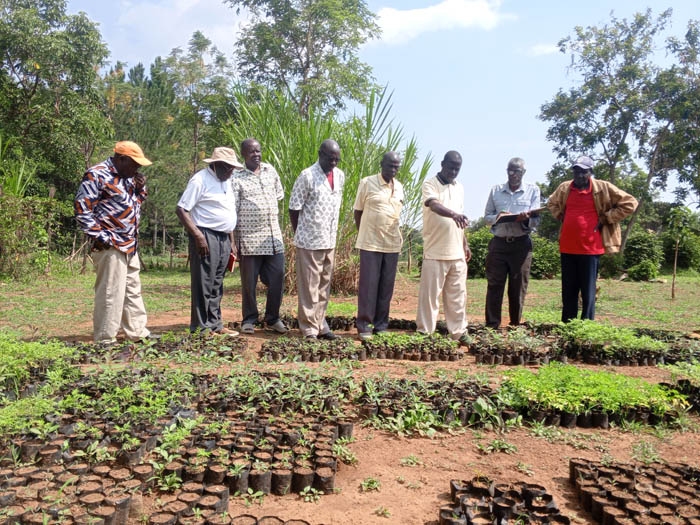
When the Samia Senior Citizens Community-Based Organization (C.B.O.) was formed in November 2021, its founders at the time set out a modest target within Nanjekho Village of Samia Sub-County, Busia County. They embarked on growing seedlings on a half-acre plot, where on reaching the transferable size they began supplying them to local institutions, as they walk the talk on environmental conservation in their locality. Three years on, the group that consists of 49 members aged 60 and above say it has impacted more than 2,000 people through seedling distribution, environmental outreaches in schools, shopping centers, health centres and markets. Steve Ogalle an environmentalist and the chair of the CBO says that their efforts have gained them government and institutional recognition.
“Initially nobody knew who we were and what we stood for. As the years went by the community began feeling our impact as the County Government of Busia whom we have worked together on numerous occasions,”says Steve.
As of 2020, Busia County’s forest cover was approximately 1.0% natural forest and 0.55% non-natural tree cover. This translates to about 2,000 hectares of natural forest and 980 hectares of non-natural tree cover. Arguably this is one of the lowest forest cover ratios among Kenyan counties. Data from the Global Forest Watch further reveals small annual losses in recent years in terms of hectares.
In the 2019 National Census, Busia County had a population of about 893,681 and covers roughly 169,500 hectares. Samia Sub-County has a population of approximately 107,176 people.
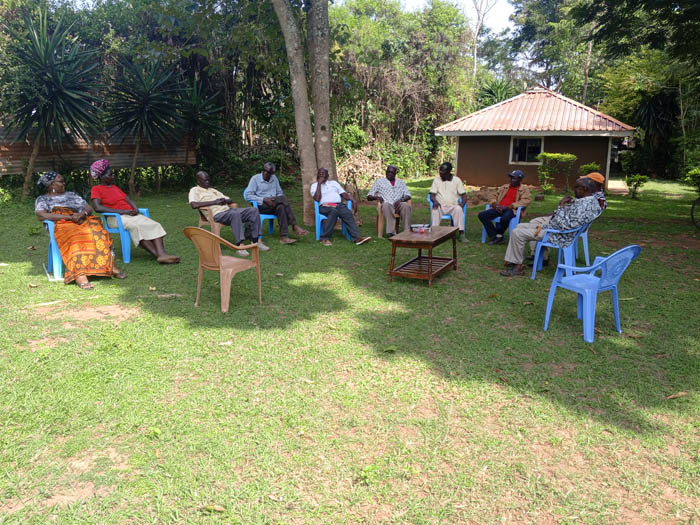
According to Steve Ogalle it is the lack of forest cover that he has seen diminish over the 86 years he has been in this world, that necessitated the formation of the group to help restore vegetation cover in Samia.
Busia County’s Integrated Development Plans (CIDP) for 2018–2022 and the current 2023–2027 document under the leadership of Governor Paul Otuoma, formally recognise environmental degradation, wetland and watershed protection, and afforestation as priorities. There have been numerous calls for tree planting, agroforestry integration and protection of riparian land. The county’s climate change action plan similarly stresses the vulnerability of local livelihoods to changing rainfall and land degradation and lists community-based afforestation initiatives such as the Samia Senior Citizen CBO as a recommended intervention.
Despite this being enshrined in the CIDP, the county may lack a realistic working formula for a county-wide tree-planting programme with clear targets, seedling supply chains, nursery networks and financing mechanisms, gaps the CBO seniors hopes to fill at the grassroots level.
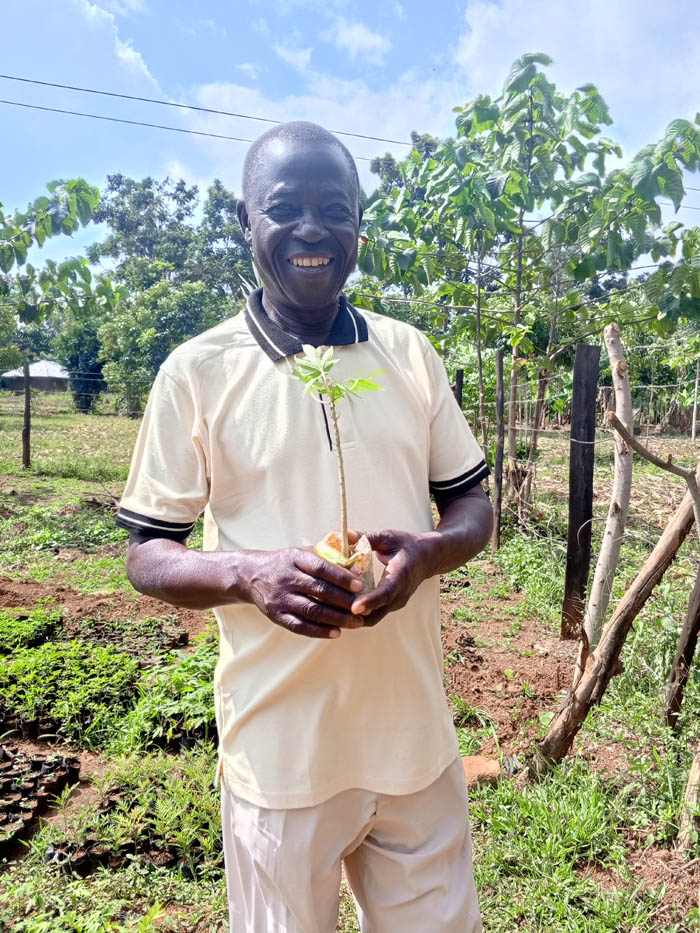
“We grew up when Samia hills was green. However most forests have been cut down. We want our grandchildren to see that again,” says Moses Obara the Treasurer of the Samia C.B.O.
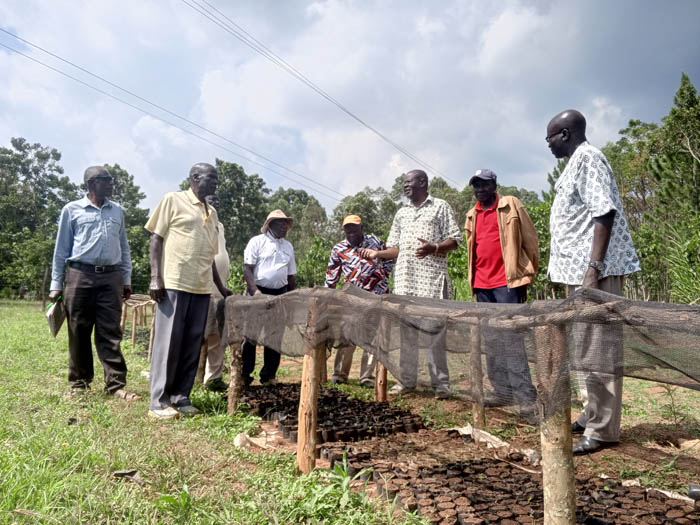
Method Okwaro a tree expert based in Busia suggests that such projects need standardization and expert mentorship in terms of seed quality, species choice and tree aftercare to determine the survival rates, and not just the number of trees planted.
” Tree planting and watching after trees are two different things. Whenever we do community outreaches we always urge community members and school children to adopt a tree. This helps them to look out after the trees, “ Says Okwaro.
The CIDP further identifies the reasons for deforestation as land tenure competition, short-term income needs that force the people to cut down trees for charcoal burning or land conversion into farms as well as timber production. The document further proposes livelihood support through mixxed farming of crops and trees.
Despite the members of the C.B.O being senior citizens their passion for environmental conservation has been converted into a communal beneficial venture which in the long run will be their social capital.
“We also sell the seedlings to various people at affordable prices, though the prices vary depending with the tree species. There are times you can visit the nursery and find it half empty,’’ added Tiberious Achoka a group member.
The C.B.O. demonstrates how local social capital and cultural memory can be converted into a communal beneficial venture. From the proceeds of selling seedlings the members bank the monies which they use for future ventures and other farming inputs. The CBO has partnered with a number of institutions including the county government in its afforestation quest.
